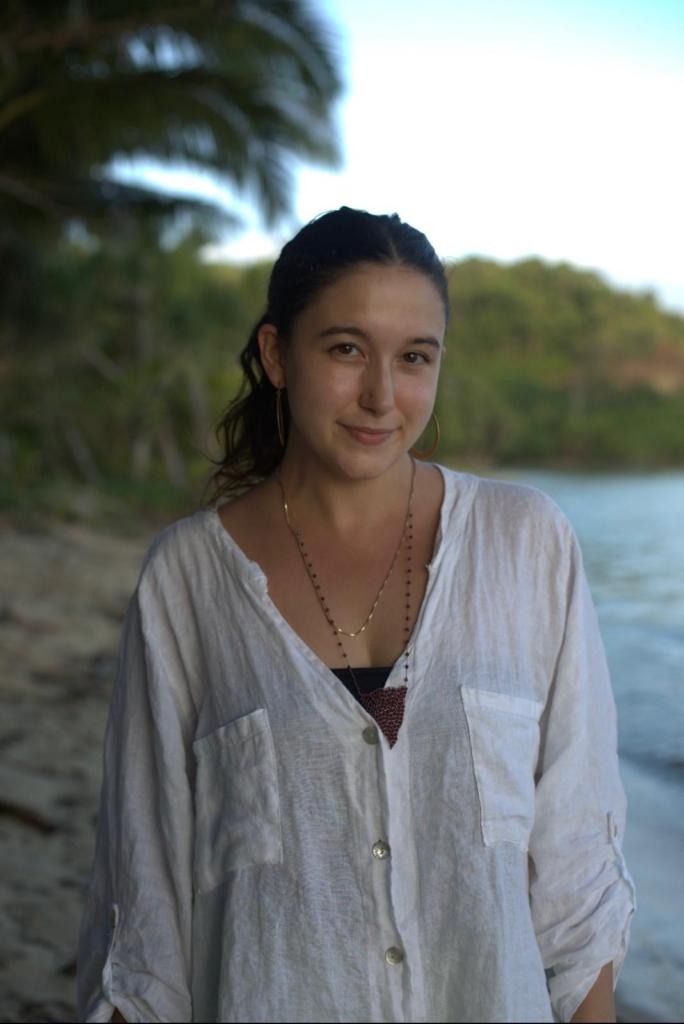
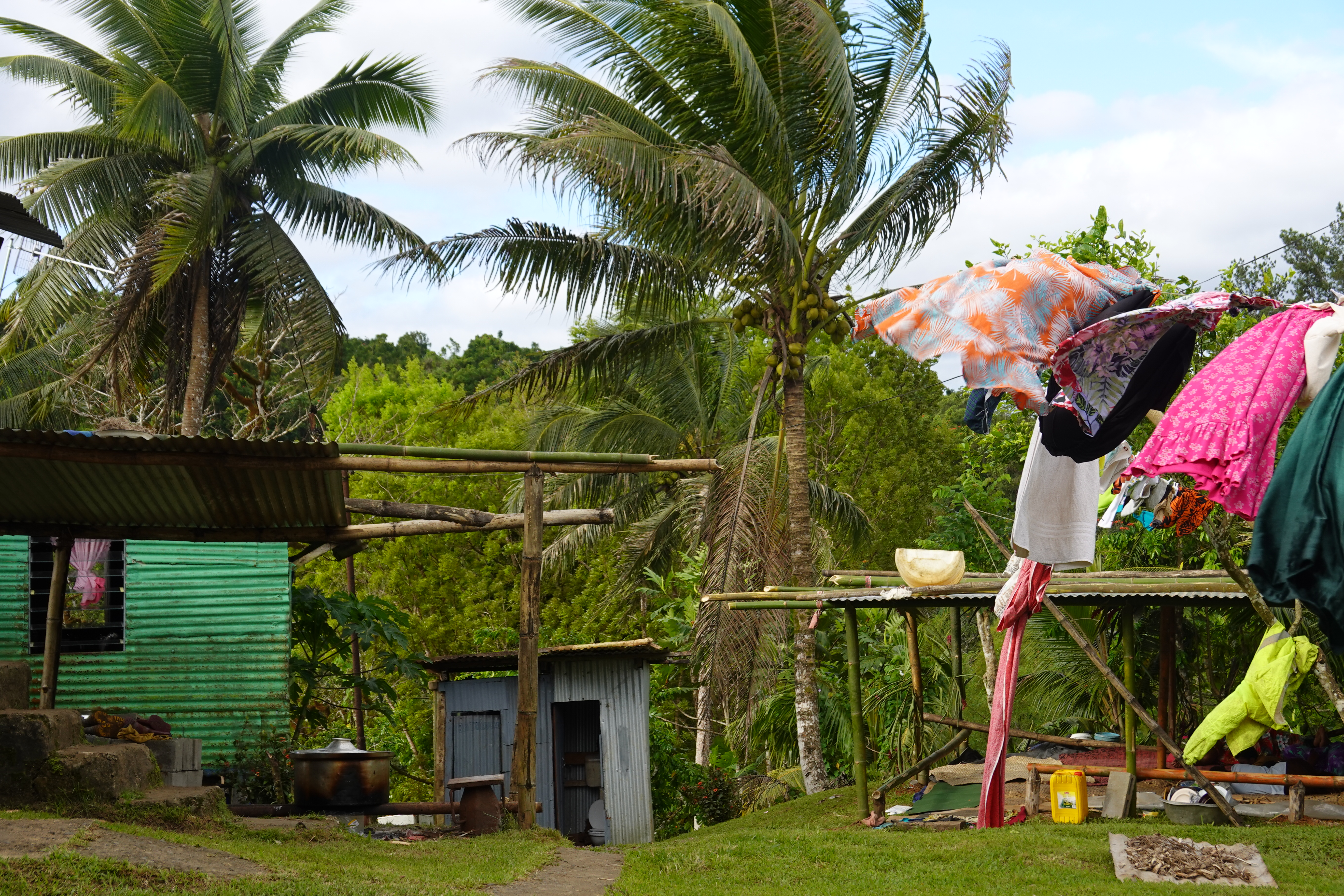
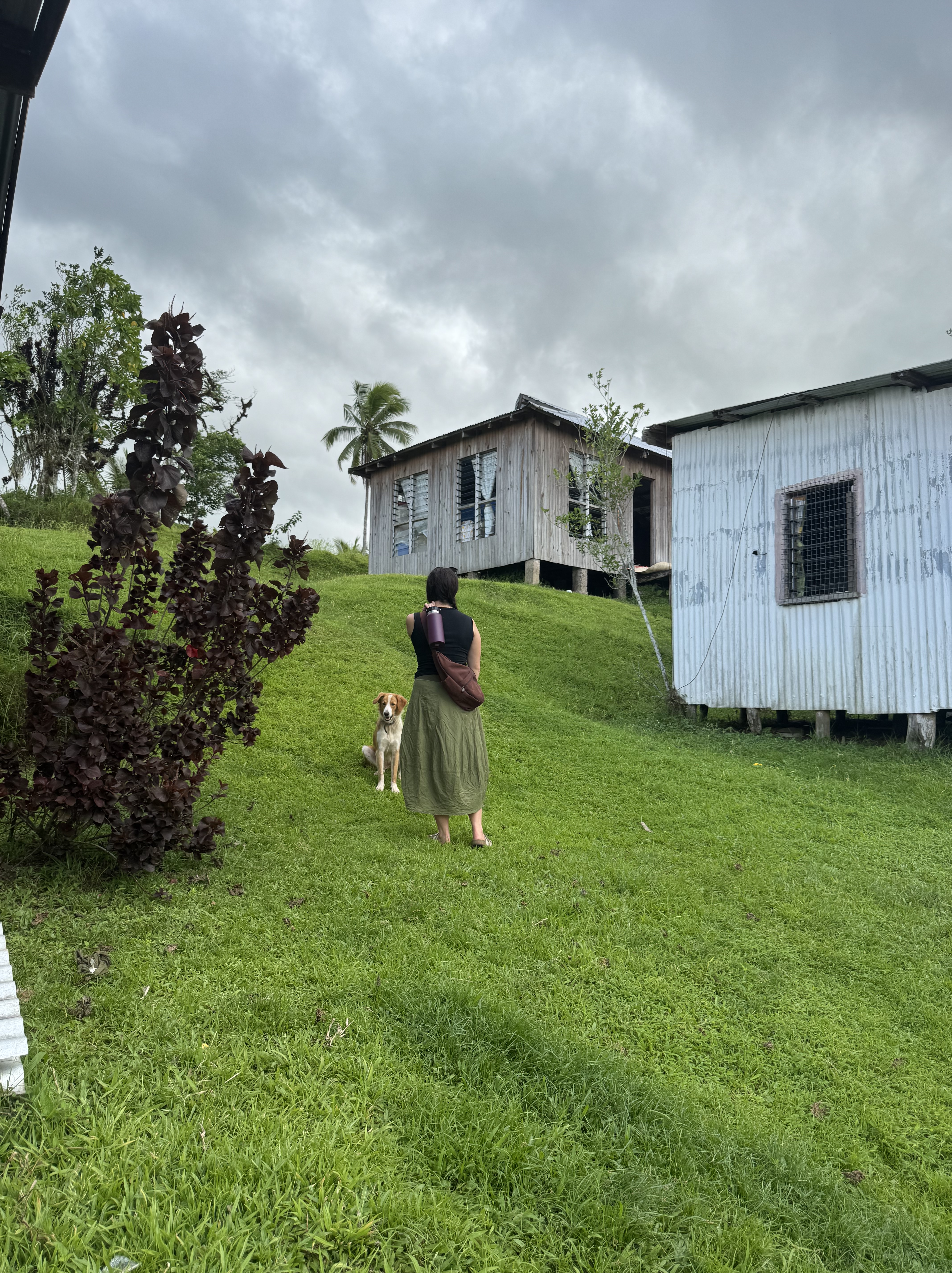
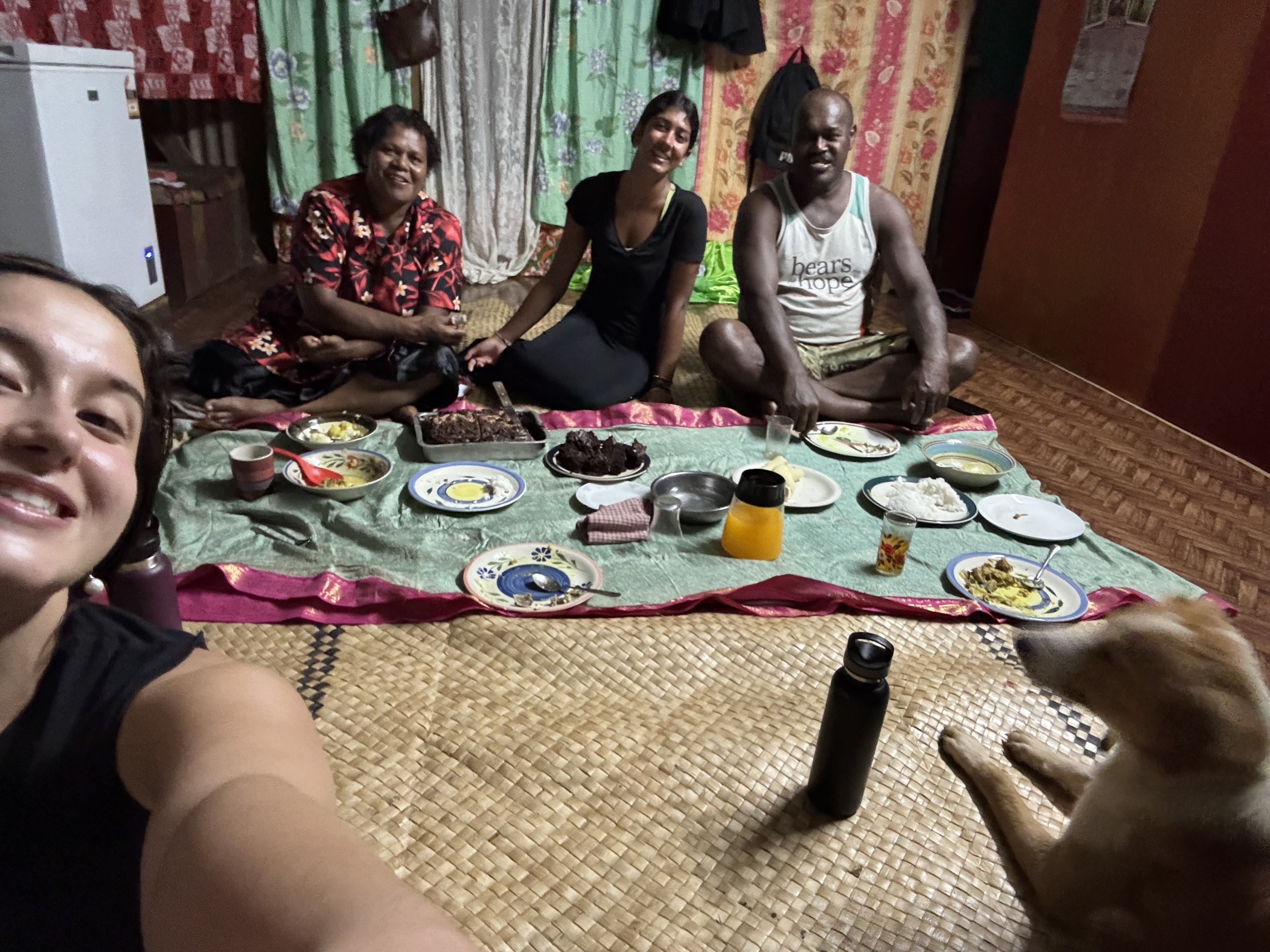
Lauren and I met through a mutual friend and our paths crossed spontaneously. Her warmth and generosity led her to host me for four days in the remote village where she lives and works, a tight-knit community of just over 100 people nestled near the highlands of Vunidawa.
As a Peace Corps volunteer, Lauren partners closely with the village to support economic development initiatives, with a focus on uplifting women through local entrepreneurship and community-led growth. But beyond the logistics of her project, Lauren’s time in Fiji has been deeply transformative, shaped by the rhythms of the land, the strength of tradition, and the daily reminders of how climate, culture, and humanity are all interwoven.
In this conversation, we talk about her project, what she’s learned from living in a village far from the noise of modern life, and how her time in Fiji has reshaped her understanding of connection — to people, place, and the planet.
Can you start by telling us a bit about yourself? What led you to join the Peace Corps, and what was it about Fiji that drew you in?
Lauren graduated from Northeastern University in 2023 with a degree in Business Administration, concentrating on brand management and entrepreneurship. But by the time she finished school, she felt disheartened. Her classes had focused heavily on profit maximization and traditional business frameworks, but she realized she wanted to apply these skills towards a purpose-driven direction to make a positive impact in the world.
As she reflected on her next steps, it was her older sister who first encouraged her to look into the Peace Corps. She knew Lauren was adventurous, curious, and driven by human connection, and felt that a service-based experience would offer the sense of impact and community Lauren was craving.
Within the Peace Corps, Lauren was especially drawn to the Community Economic Development sector. When applying, she left her location open—ready to go wherever she was most needed. That place turned out to be Fiji.
“I was thrilled,” she said, describing how grateful she felt to be placed in such a vibrant country. It was the perfect opportunity to apply her business skills to real-world projects centered on entrepreneurship and economic development. In Fall 2023, she officially began her service in Fiji, and she’s been living in Matailobau Village ever since.
Tell me more about your current project. What are you working on, and how has it evolved over time?
Lauren’s official title is Community Economic Development Facilitator, and her role began with months of foundational work. The first two months were spent in intensive training—learning Fijian language, cultural skills, and development methodologies through a Peace Corps approach called PACA (Participatory Analysis for Community Action). This framework ensures that the work is community-led and co-created, with Peace Corps members acting as supporters and collaborators, rather than outside decision-makers.
Next came a three-month integration period in her assigned village, a time set aside to build trust, observe village life, and understand the nuanced needs of the community. “This part was intentionally no technical work,” Lauren explained. “Just building relationships and listening.”
After these five months of prep, the official project work could finally begin. Unlike some Peace Corps roles with clearly defined project plans, Lauren’s placement came with only a few broad goals: to promote personal money management and income-generating activities. So she started with conversations—co-facilitating workshops and connecting with community groups, especially women and youth, to learn what they felt was most needed.
Through these discussions, one issue rose to the surface: unhealthy eating. Fiji faces high rates of obesity and diabetes, and the women’s group identified this as a key problem they wanted to address. When brainstorming solutions, they realized the village had an unused piece of land—an underutilized asset with real potential. From there, the idea emerged: a healthy eating restaurant, built by the community, for the community.
That single idea sparked a much larger vision. As more voices joined the planning process, the project expanded to include a vegetable farm to supply the restaurant, a small shopping mall with eight stores, and—someday—a gas station. Lauren helped the group secure funding for the initial development phase, applying for a grant through USAID just before the Trump administration took office in 2025.
Then came an unexpected roadblock. USAID suspended its international funding programs, freezing the entire project for 90 days while the new Department of Government Efficiency (DOGE) investigated Peace Corps finances. “We weren’t even sure if we could keep the money or stay in our positions,” Lauren said. But by mid-April, the investigation cleared, and six of the eight Peace Corps members in Fiji were allowed to continue using their grant funding.
Remarkably, Lauren’s project still holds some of the last USAID funding awarded before the shift. With USAID and Fijian Ministry of Trade funding secured for the first development phase, they’re now working on fundraising for phase two.
This journey—entirely community-driven and built from the ground up—has far exceeded Lauren’s expectations. She wasn’t handed a pre-set project; instead, she and the village have co-created one together. “It’s been so collaborative,” she said, noting that the village already had a strong knowledge base and eagerness to grow.
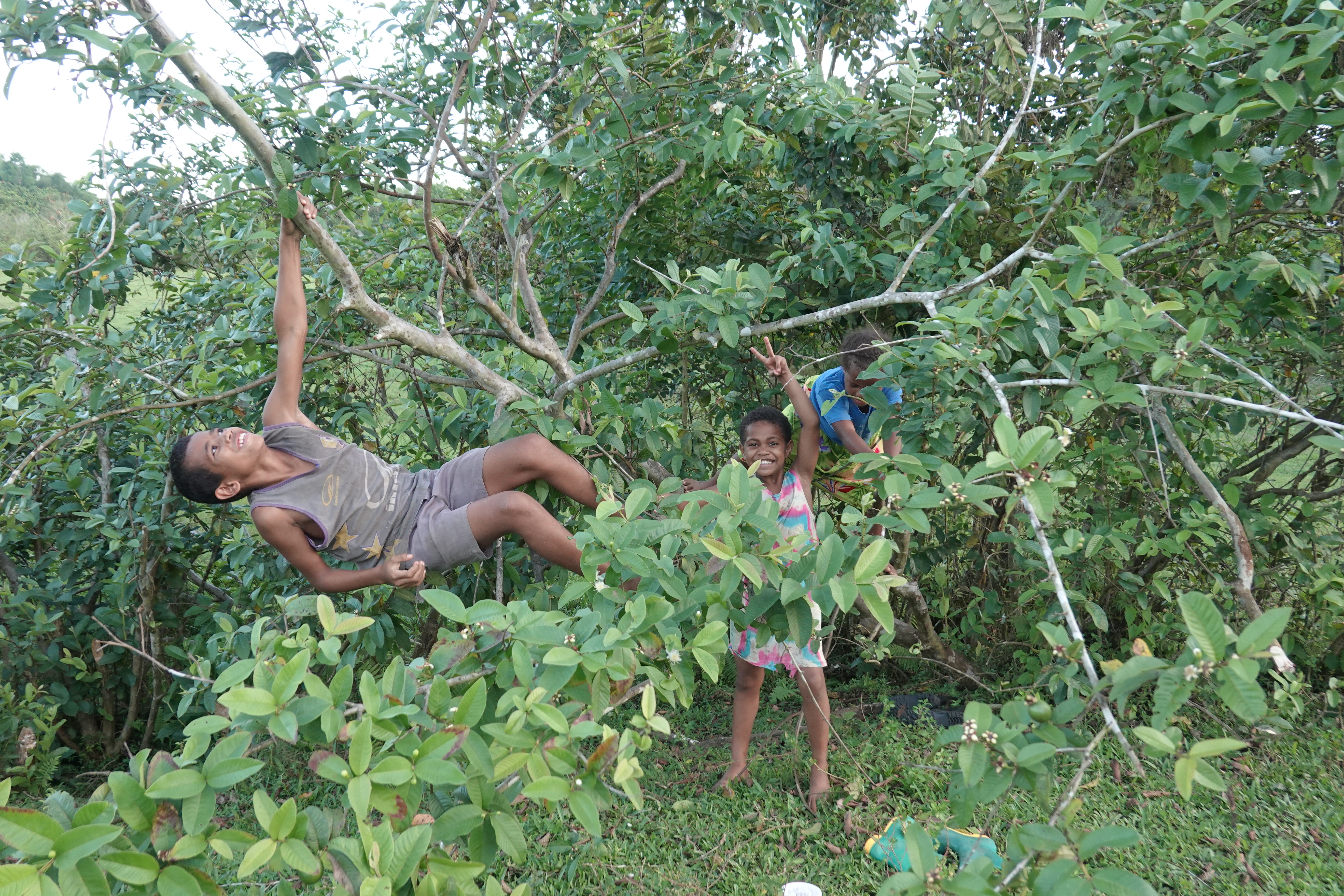
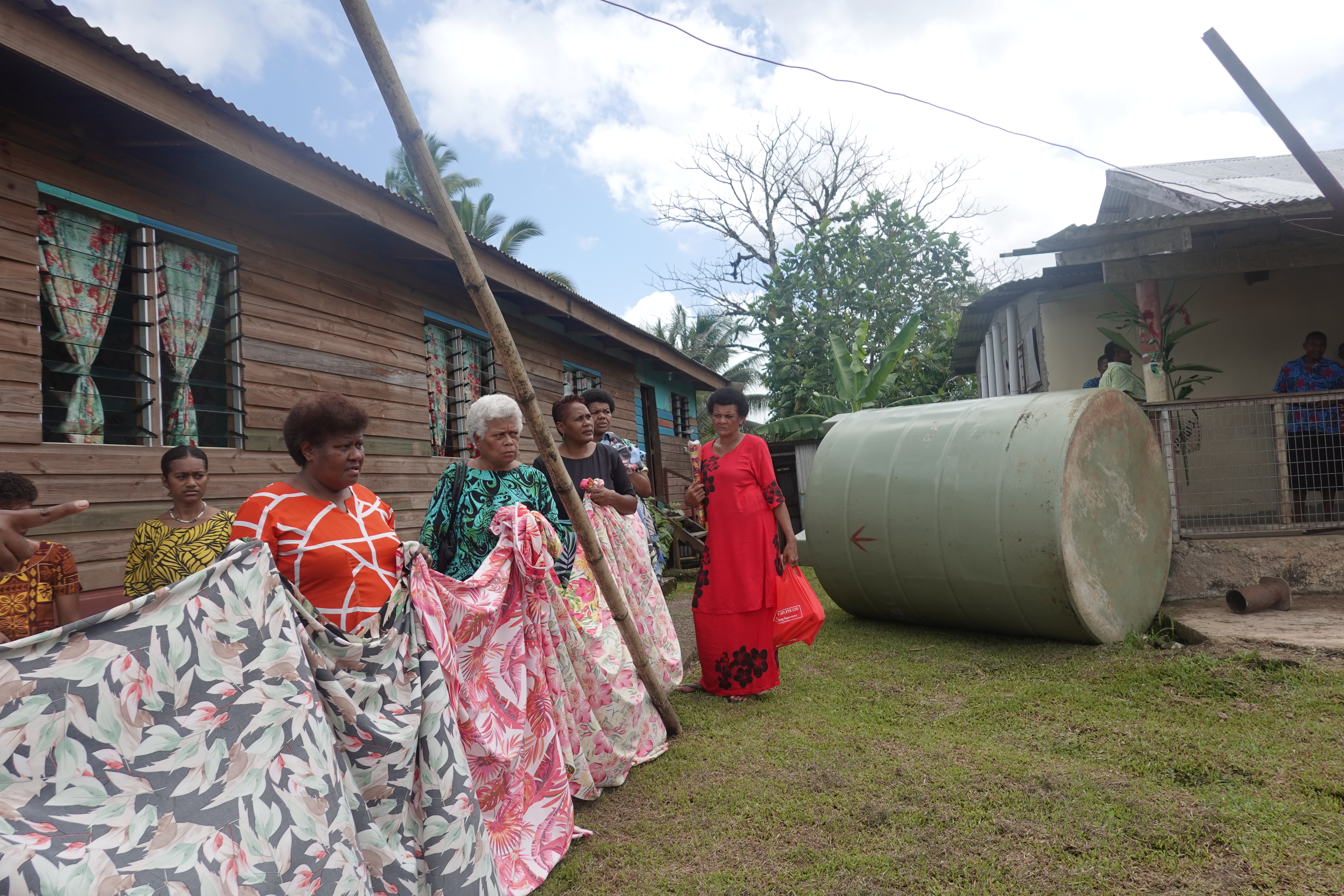
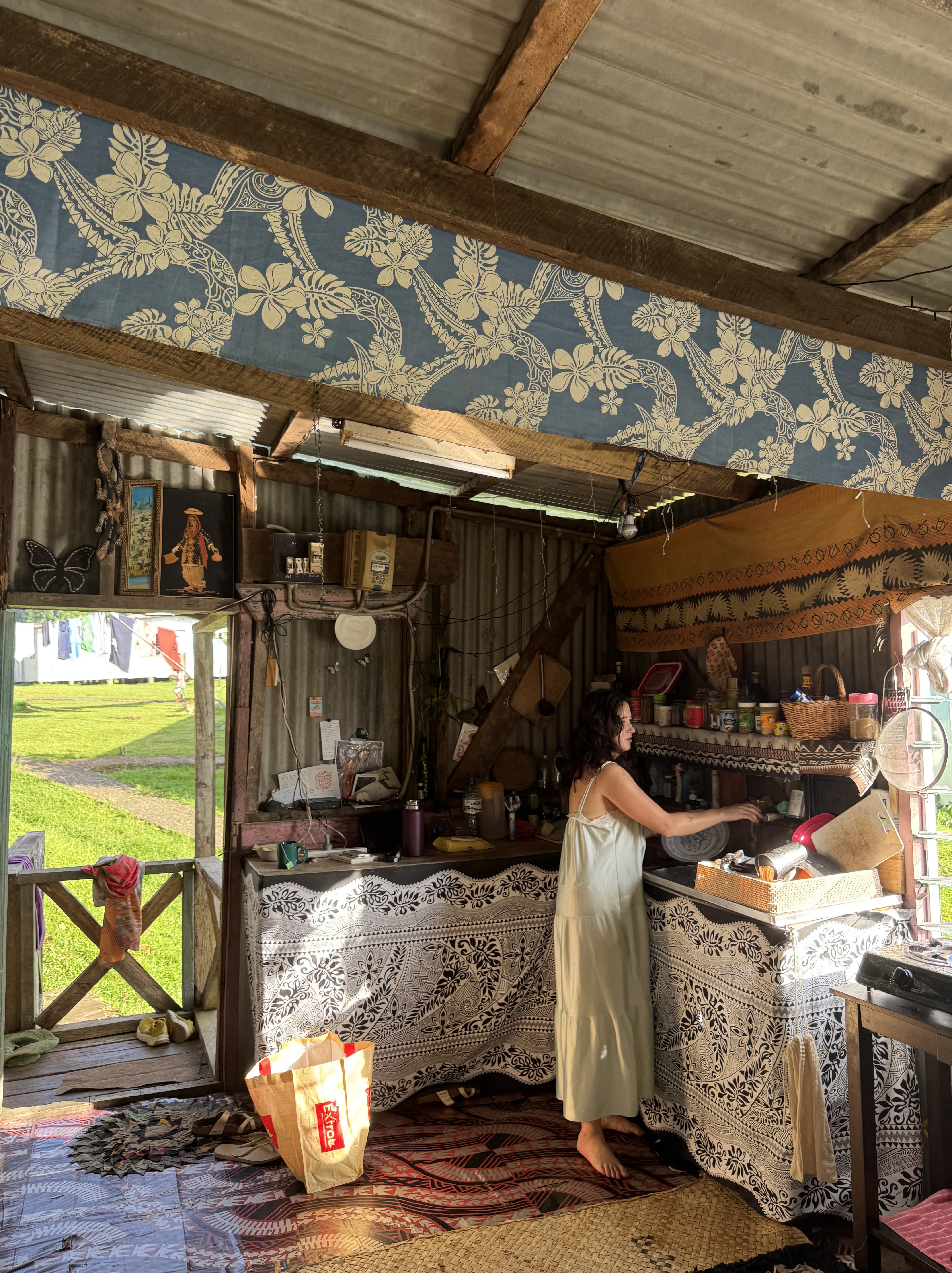
When I visited Lauren in her village, it was clear just how deeply embedded she is in the community. Known by her Fijian name “Nita” (mine was “Nika”!), she moved through the village as both ambassador and friend. Every few steps, someone stopped to check in with her—asking about project updates or chatting about family life. Watching her in that environment made it obvious that this wasn’t just her work—it was her community too.




What have been some of the biggest challenges or surprises during your service? What about moments of growth or unexpected success?
Lauren was struck by the “nuances of development as a concept.” Western societies often view countries like Fiji through a lens of pity, assuming they’re lacking because they don’t have the same material wealth or infrastructure as places like the U.S. But what surprised Lauren most was how much Fijians do have—things that are deeply meaningful yet often undervalued in the West. This realization made her question the true end goal of development. As Fiji continues to “develop” in the traditional sense, adopting systems and structures similar to those in America, she worries they may lose some of their most precious cultural strengths.
This tension weighs heavily on her as she reflects on her own project. “Let’s say in the next 2–5 years the shopping center gets built and villagers begin working there. They’ll gain disposable income and more financial freedom—but they may stop eating traditional foods, spend less time with family, and drift away from cultural rituals,” she says. While she knows it’s not her place to decide whether development should happen, she didn’t anticipate how many personal and moral questions it would raise.
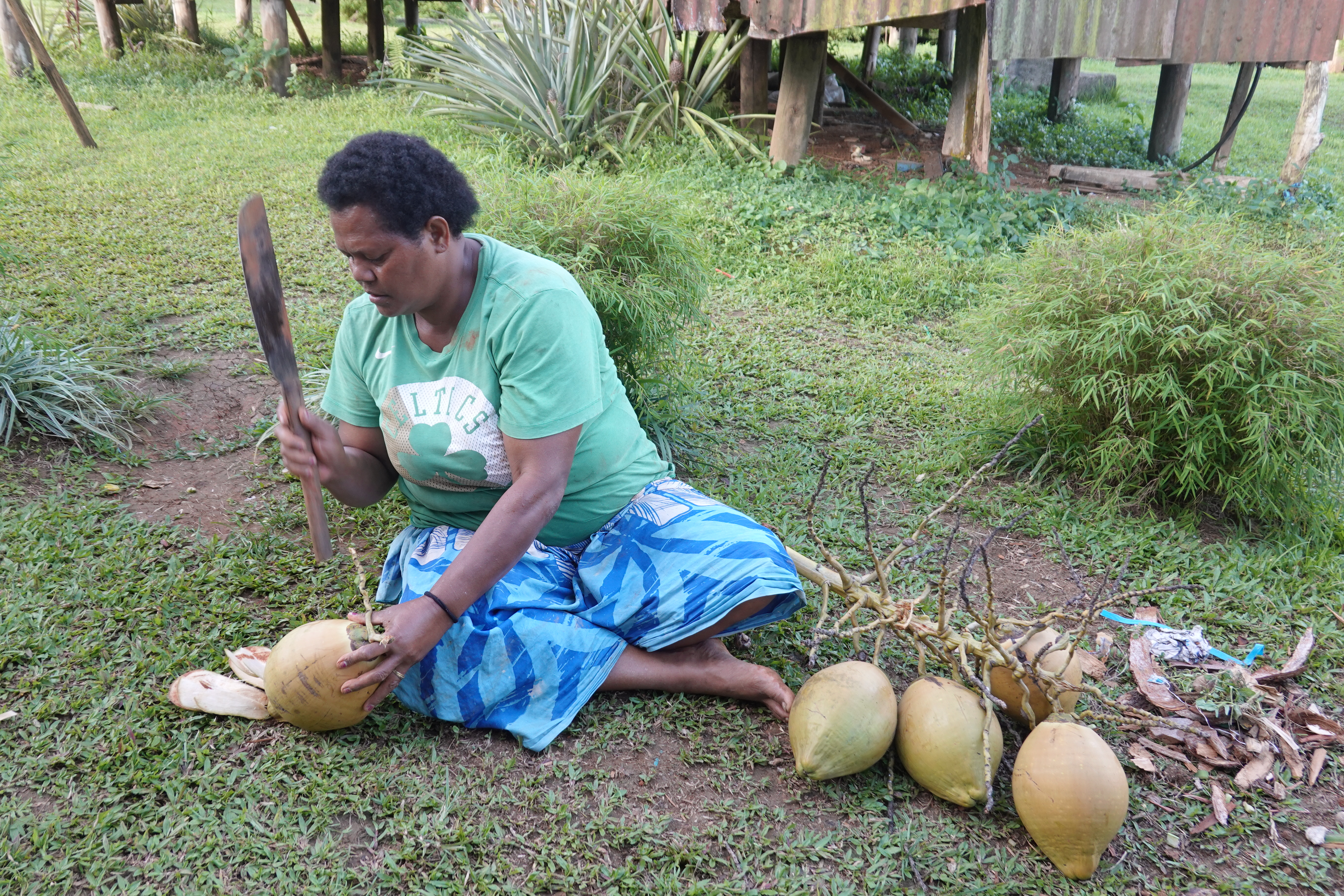


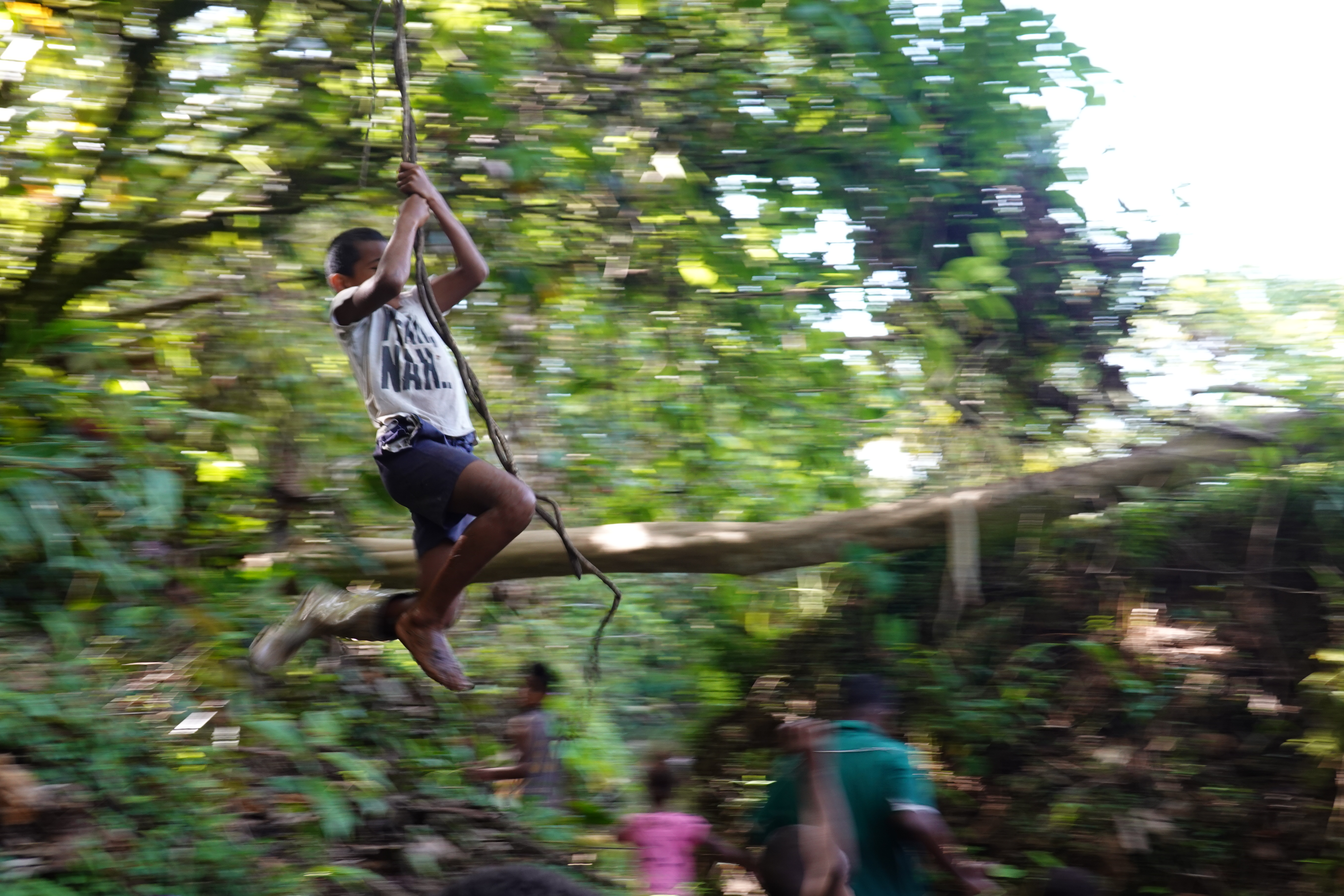
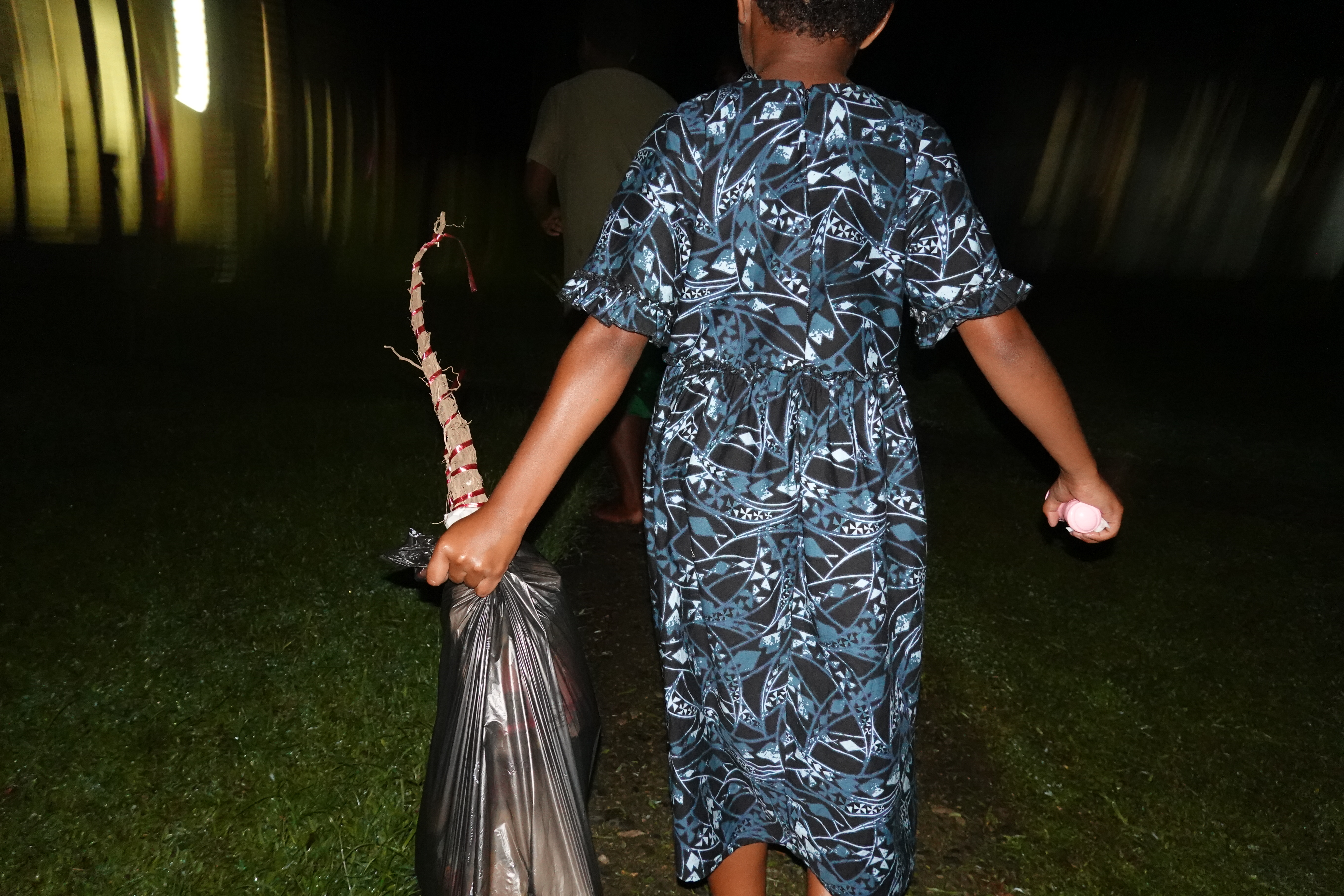
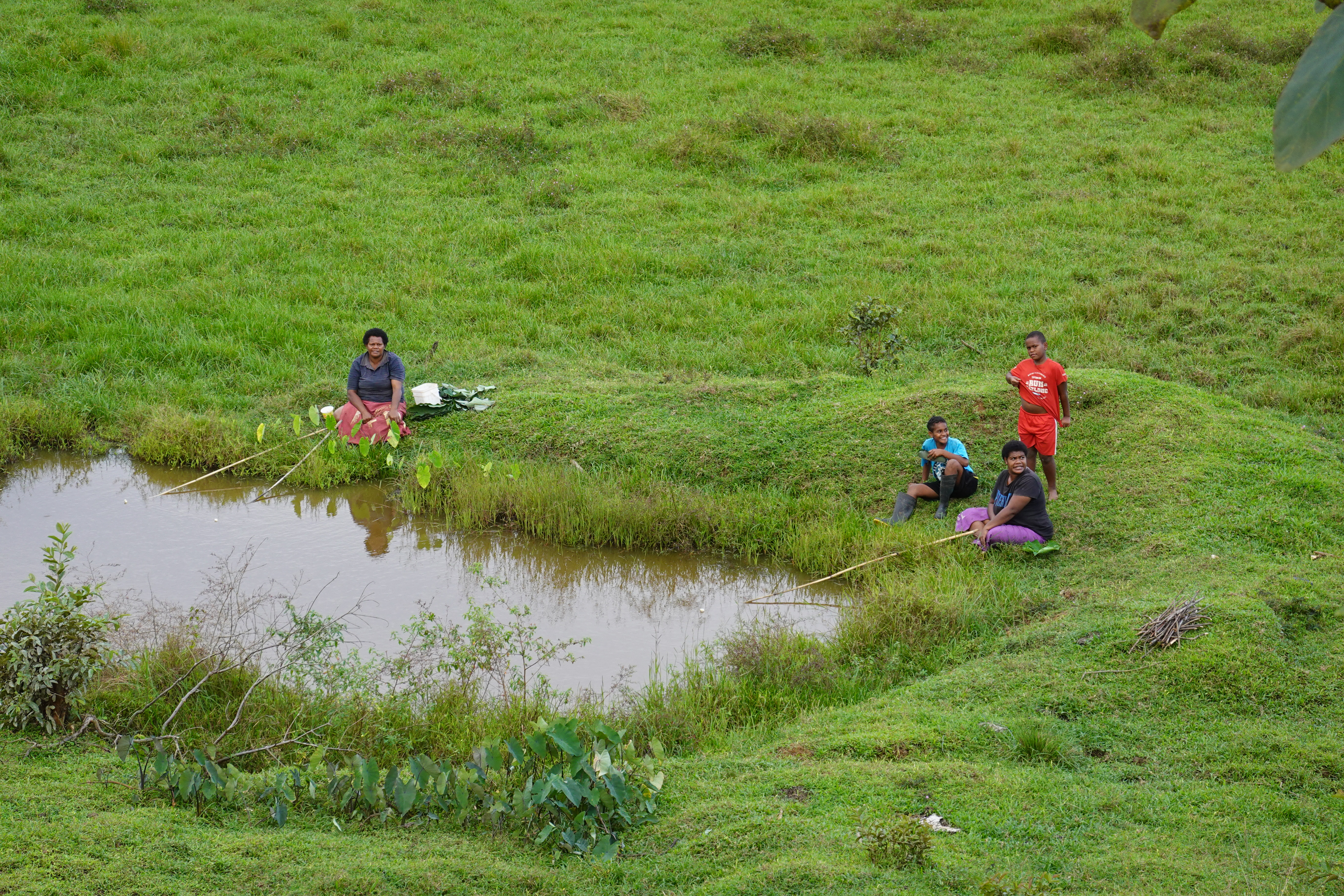
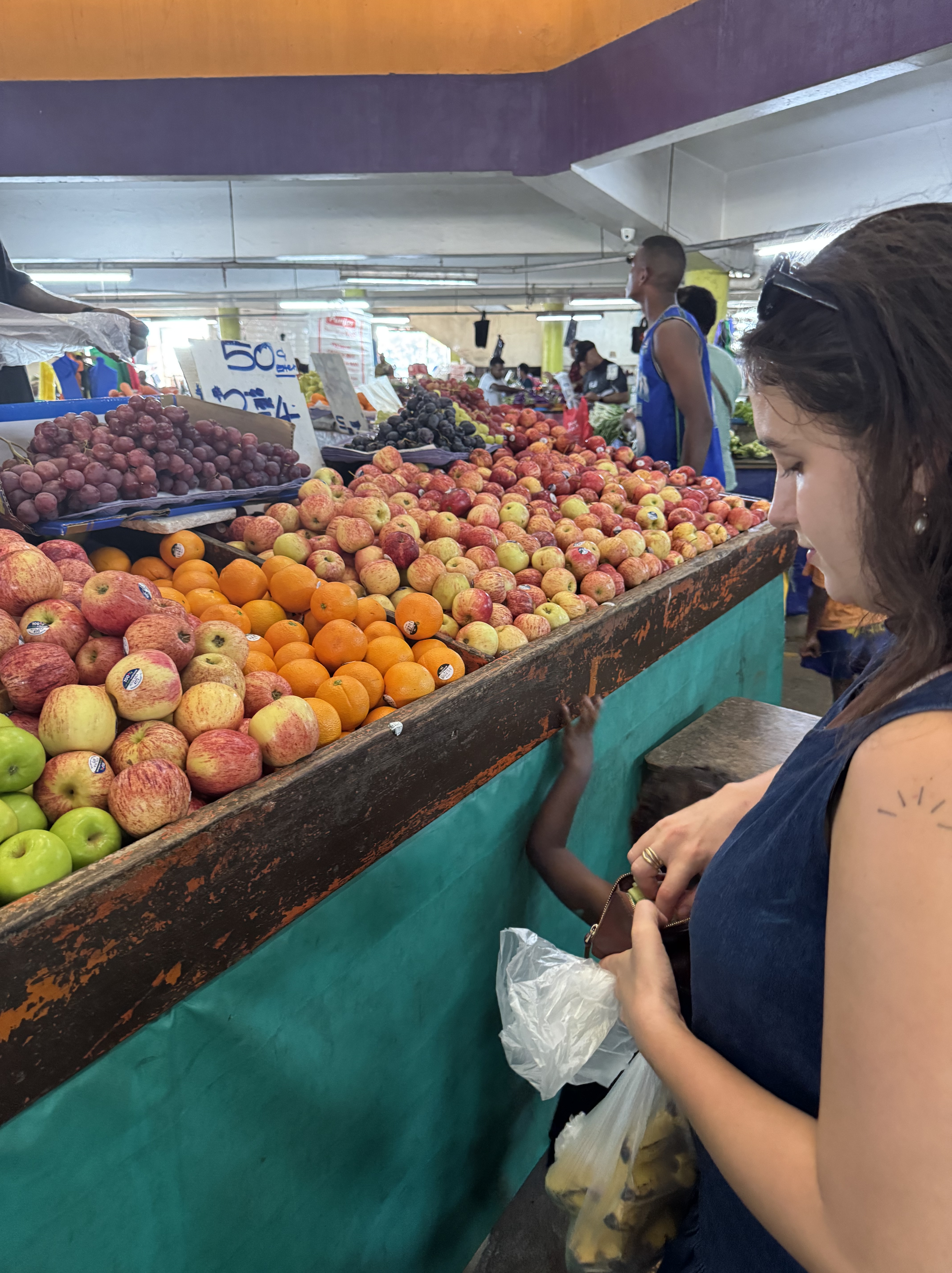
Lauren’s favorite part of her experience in Fiji has been witnessing the way people truly live off the land. Like I noticed during my own month traveling around the country, it’s clear wherever you go that Fijians have a unique and profound connection to their environment—spiritually, physically, and communally. Gathering food from the forest or eating fish caught by her host family has given Lauren a new appreciation for where food comes from and what it means to be nourished. “It feels more healing to eat food from the land, like being part of some larger cyclical process,” she explains. This aspect of village life was unexpected but incredibly fulfilling. It has deepened her relationship with the earth and reinforced the importance of maintaining a personal connection to it.
She’s also grown on a personal level—especially when it comes to setting boundaries and unlearning people-pleasing tendencies. Lauren often finds herself in a position of having access to resources others might not, and while she wants to be generous, she’s learned that constant giving isn’t sustainable. “It’s about learning to give in ways that are ethical and culturally appropriate, and that ultimately empower the community to build their own capacity,” she says. Navigating that balance has been one of her biggest lessons.
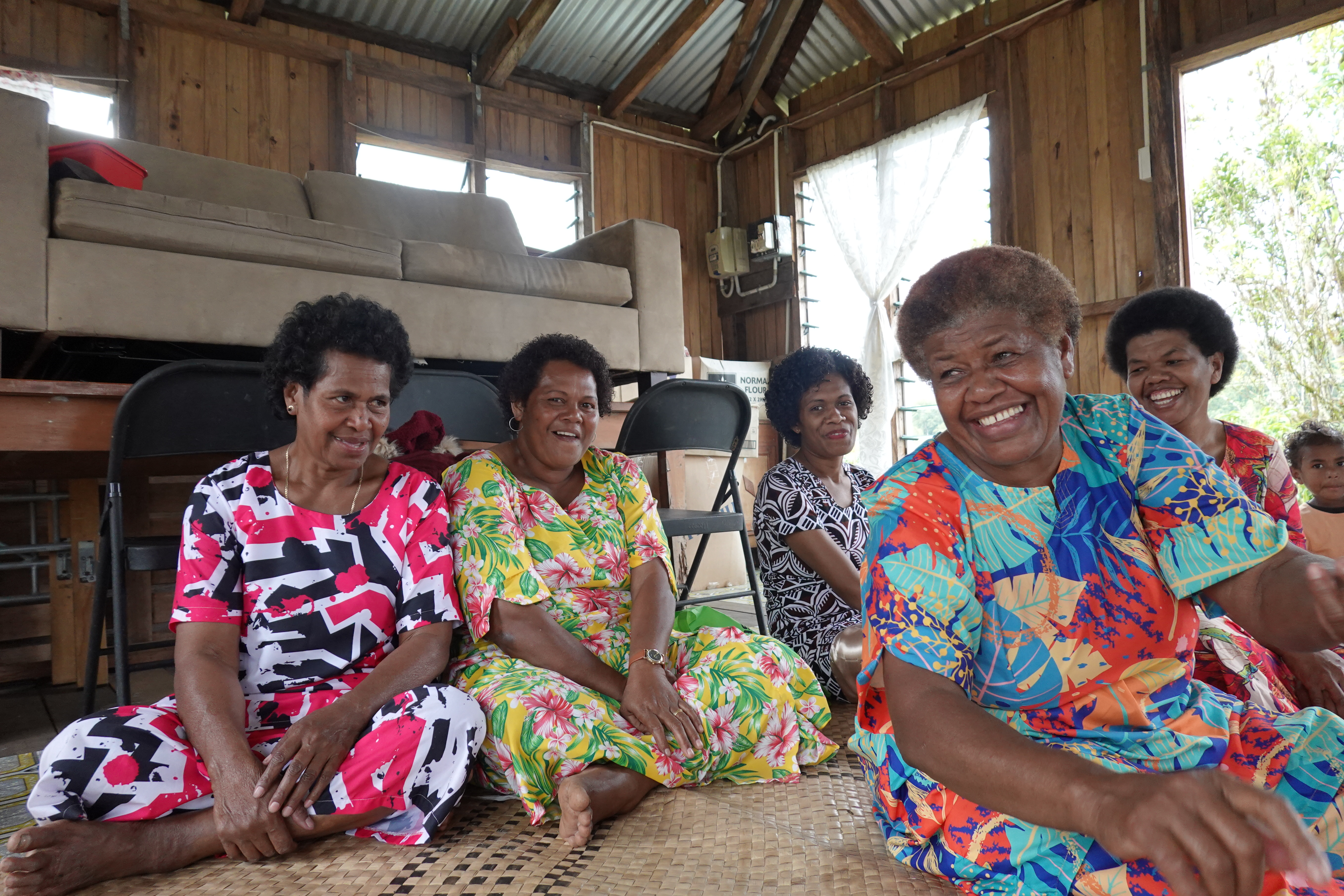
One of the most rewarding experiences has been watching the women’s group in her village grow into their own power. When Lauren first started co-leading workshops, many women were hesitant to speak up—one even cried when asked to present a group poster, as public speaking wasn’t something they were used to. Traditionally, women haven’t played major speaking roles. But over time, Lauren has seen an incredible shift. Now, the women lead discussions, ask questions, and even compete for the chance to present. She’s watched their confidence grow alongside their practical skills—writing emails, planning projects, managing logistics—and has found great joy in helping create a space where that growth could flourish.

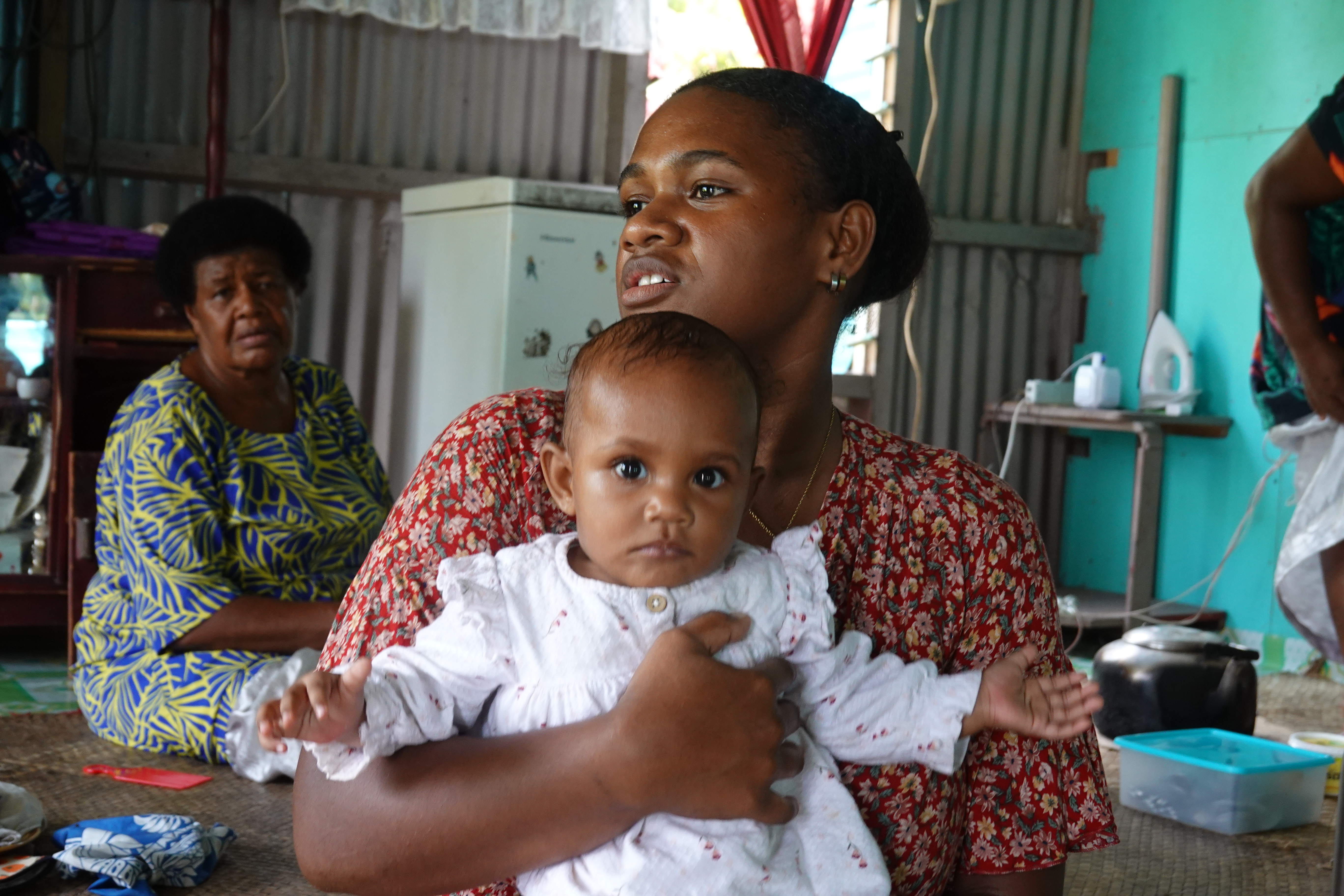

How has your understanding of climate change shifted while living here—especially in a country so closely tied to the ocean and the land?
Interestingly, before Trump took office, climate adaptation was a core focus of the Peace Corps role in Fiji, and one of Lauren’s key missions was to support related initiatives. While that’s no longer officially part of the work, before January 2025 she had the opportunity to attend several powerful conferences bringing together Indigenous South Pacific communities to envision the future of climate adaptation. She even helped organize one—The Blue Pacific Youth Initiative.
Lauren came in knowing about climate change, but her understanding of it has deepened dramatically. Fiji, despite its size, is well-known in global climate spaces for its leadership and advocacy. Through her work and conference participation, she’s come to see how large-scale, systemic forces—especially corporate and economic systems—play a defining role in how climate change is addressed. “Unless we engage with those systems directly, not much can really change,” she says. At the same time, living in the village has shown her what it looks like when people maintain a close, reciprocal relationship with the land. The challenge lies in bridging those two worlds. True climate progress, she believes, will come only through collaboration—between grassroots wisdom and the high-level systems that shape our future.
What’s something you wish more people knew or understood about Fiji that isn’t often talked about?
For Lauren, the village way of life has been the most unique and eye-opening part of her experience. She’s been deeply moved by the customs, rituals, and the powerful connection iTaukei Fijians (Indigenous Fijians) have to their traditional way of life. While no society is without flaws, Lauren believes there is so much the world can learn from the communal mindset she’s witnessed. Too often, Fiji is reduced in the global imagination to crystal-clear waters and luxury resorts—but it’s so much more than that. She hopes more people consider visiting Fiji not just as a tropical escape, but as an opportunity for a deeply authentic, cultural experience.
From my own time in Fiji, I can wholeheartedly agree with everything Lauren shared. The traditions, community values, and deep reverence for land and people—centered around the concept of Vanua (explained below)—made me feel immediately connected to my surroundings. Whether it was presenting kava to the chief upon entering a village or helping out with youth activities, I was met with warmth and welcome at every turn.
Have you had any moments where you felt deeply connected to the natural world — a memory, a day, or a conversation that shifted something in you? And can you talk to me more about Vanua?
During her final week of training, only eight weeks into her time in Fiji, Lauren spent a day on the river with her host family and village friends. They floated downstream on traditional bamboo rafts (bilibili) for a beach day—making fires from nearby wood, spearfishing, and catching eels with their bare hands. Lauren was taught how to clean and prepare the eel, while others gathered kumquats from the trees, laid out taro root from their farms, grilled the day’s catch, and drank fresh coconut water. Everything they used was gathered from their environment. Even when it began to rain, they simply wove palm fronds together to create shelter. In that moment, the Earth provided for everything—transport, food, shelter, water, and fire. It was her favorite day in Fiji, and a powerful reminder of how generous and sustaining the natural world can be when we live in rhythm with it.

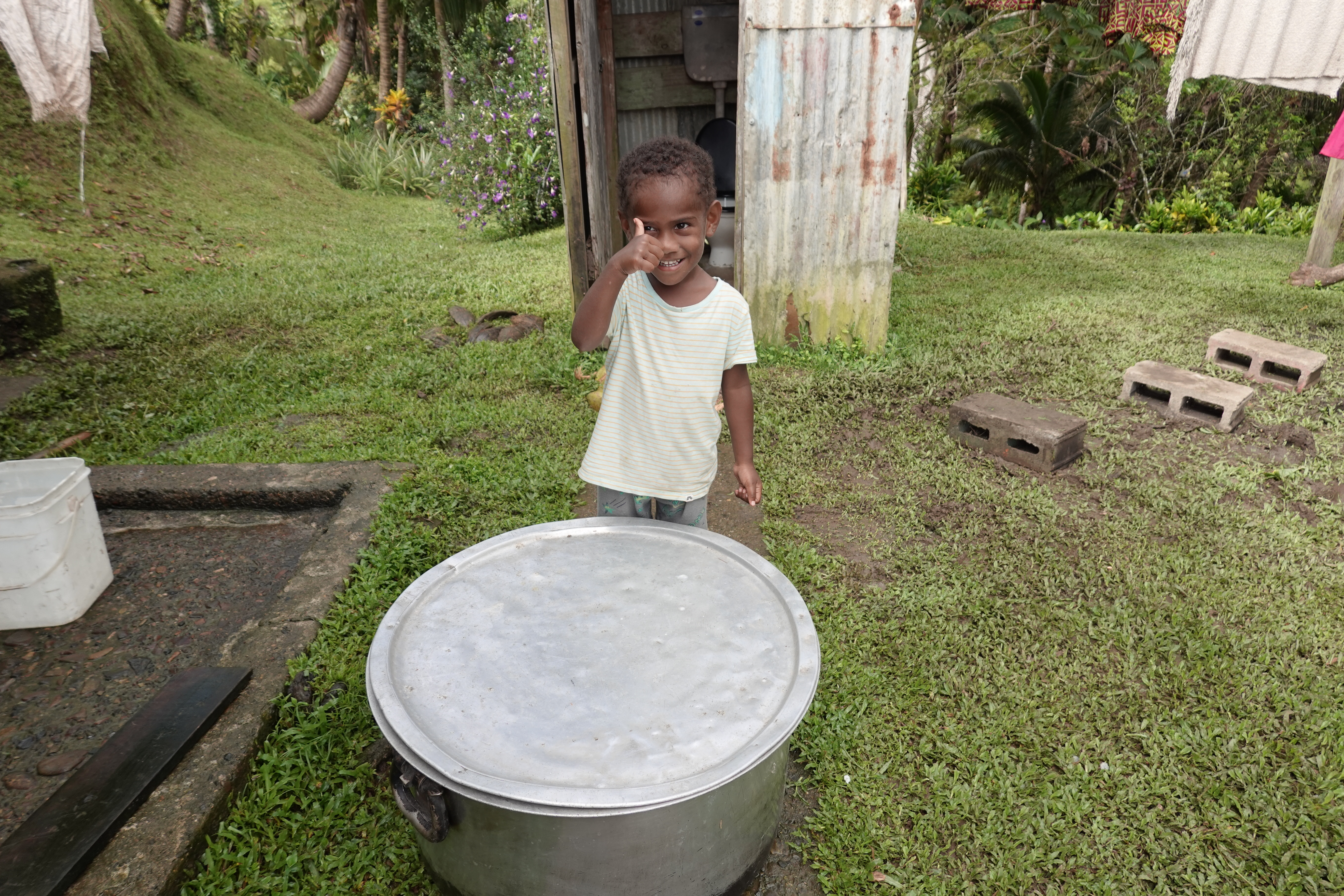


This relationship between land, spirit, and community is reflected in Vanua—one of the most important and foundational concepts in Fijian culture. Lauren describes it as a “singular consciousness between land, people, animals, spirits, and energy.” Everything is deeply interconnected. One beautiful example is kava—the traditional drink made from a root crop that’s ground into powder and mixed with water in a ceremonial setting. Kava is more than a drink—it’s a ritual meant to honor ancestors and connect to Vanua. Farming the land is seen in the same way: putting energy into the land is believed to generate spiritual energy that flows back into your family and community. But if you break that cycle—if you stop giving to the land—Vanua won’t provide for you in return.
I was lucky enough to join many kava circles during my month in Fiji (maybe too many, if I’m honest—haha) and I can say I’ve never experienced anything quite like it. Even with a limited understanding of Vanua at the time, the ritual felt deeply sacred—like you were participating in something ancient and powerful. It felt like an obligation to honor the earth’s energy and keep the cycle intact.
Vanua is not just a concept—it’s a way of life that grounds Fijian identity in a deep, ancestral relationship with the Earth. While many Western societies are moving further away from this type of connection, Fiji has never lost it. There’s so much the world could learn from this worldview. And part of what makes this relationship so unique is that, unlike in many colonized countries, iTaukei Fijians were never forcibly removed from their land. Their connection to the place was never broken—and so their understanding of Vanua remains ancient, intact, and deeply embodied. Even the word itself translates to both “land” and “earth,” which reinforces why the environment is treated with such reverence in everyday life.
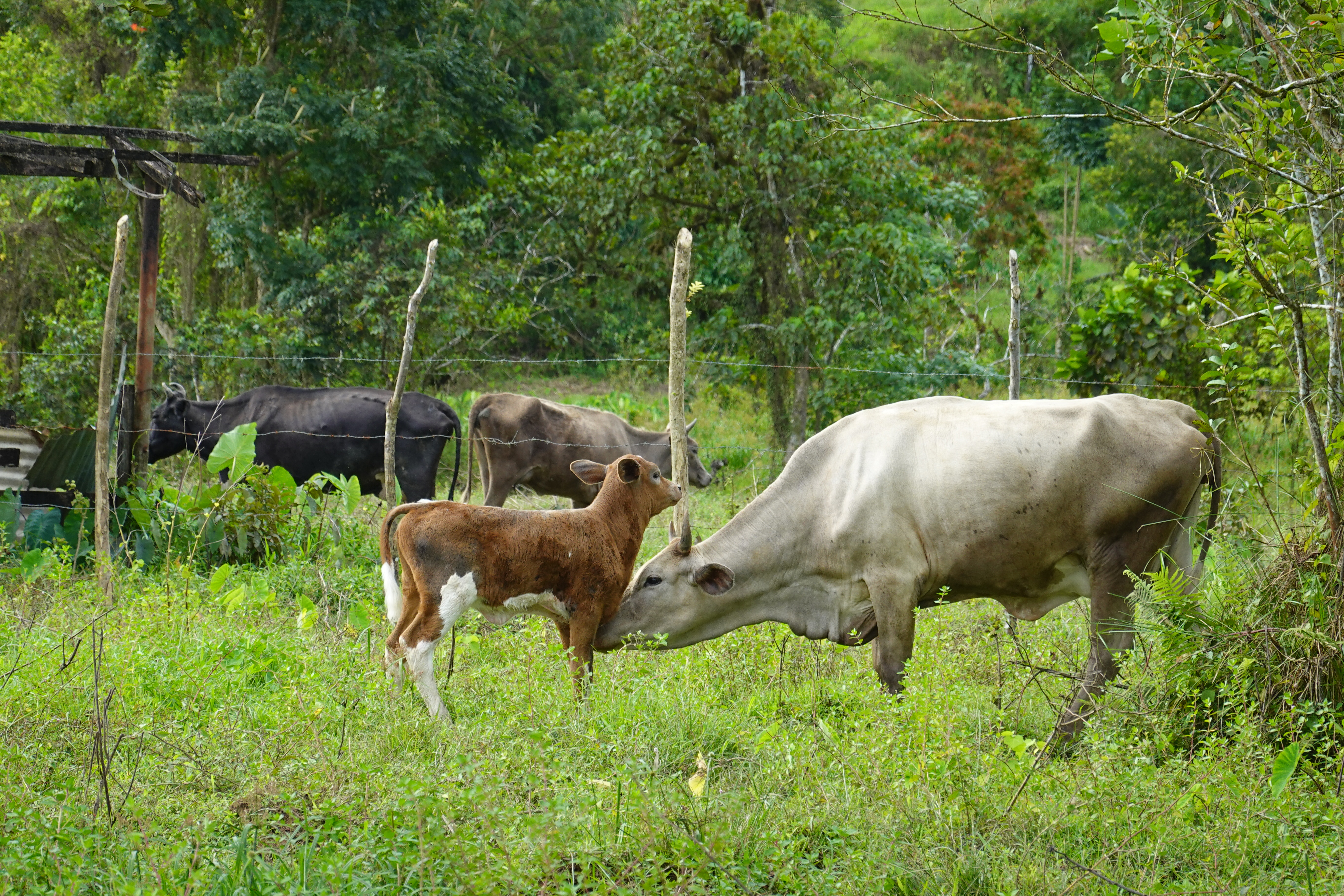
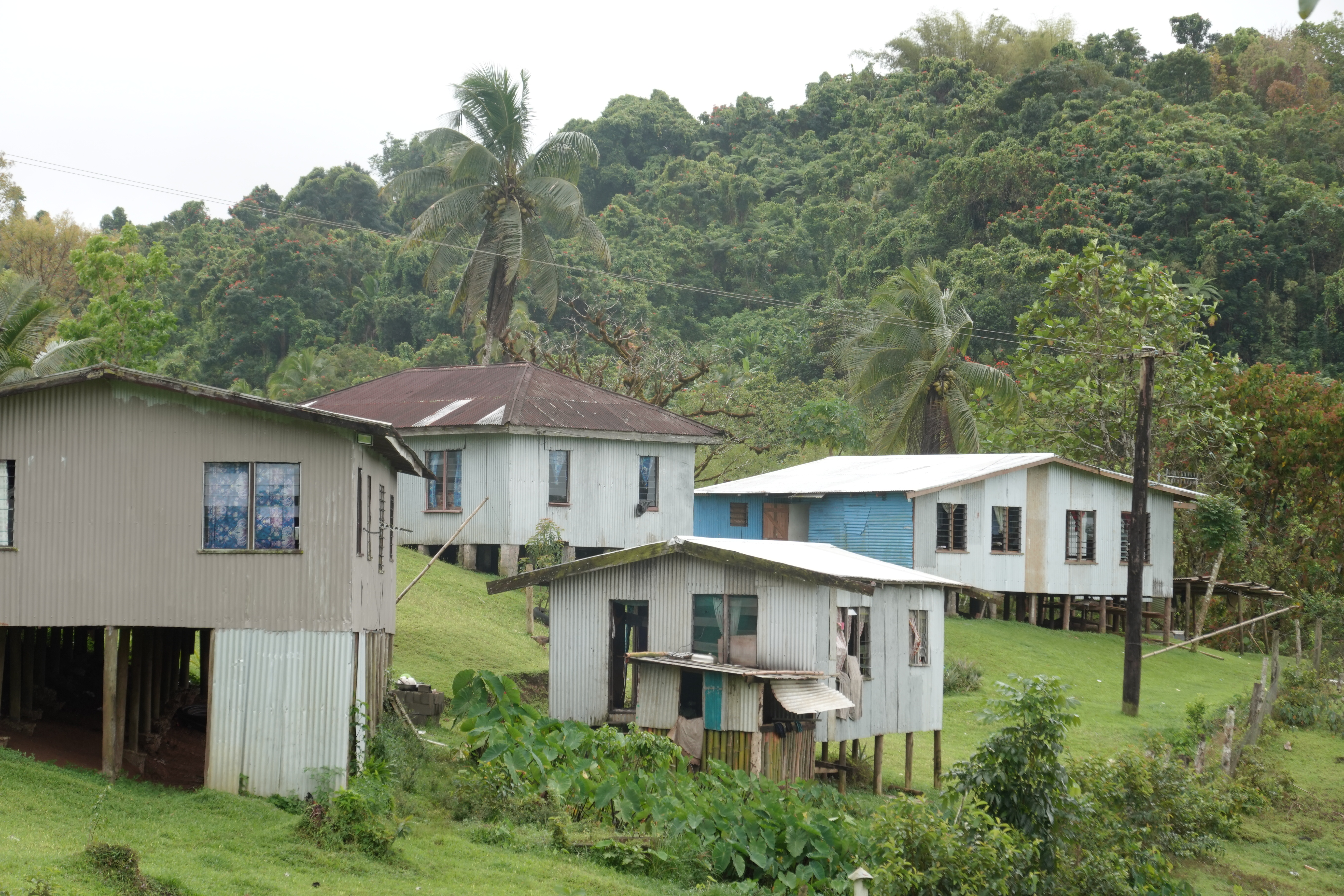
Lastly, what do you think this experience will carry into your life moving forward — how you live, how you work, or how you care for the planet and people around you?
Lauren’s time in Fiji has impacted her in countless ways, but the most profound shift has been in how she envisions her future. Living in a village that functions as its own self-sustaining ecosystem—with a strong sense of community and open, shared ways of life—transformed her understanding of physical space. It’s made her think deeply about how our environments shape social interaction and belonging. In the West, where social isolation is a growing issue, Lauren now sees the potential for physical design to foster community. She’s become passionate about social sustainability and sustainable urban development—specifically, how we can build physical spaces that encourage togetherness rather than separation.
This passion has shaped her next steps. In Fall 2025, Lauren will begin a Master’s in Sustainable Urban Development at Oxford University, while also serving as a Princeton in Asia fellow with the AIP Foundation in Ho Chi Minh City, Vietnam. Her work will focus on inclusive urban mobility—making streets safer and more accessible to encourage transportation, active public spaces, and ultimately, deeper social connections. She’s excited to learn from both Vietnamese and British perspectives and reflect on how they compare to her understanding of Fijian culture.
Fiji has also changed how Lauren views work and professional life. She’s learned the value of not rushing—of slowing down, creating space, and allowing for deeper conversations and more thoughtful collaboration. In the village, meetings began with time to connect personally, which allowed for greater reflection and more meaningful exchange. She hopes to carry that ethos forward wherever she goes.
Lauren will always hold deep admiration and gratitude for the community in Fiji that so generously welcomed her. She’s excited to see how the shopping center project develops and how the women continue to thrive through their healthy eating restaurant. She’s also curious to watch how Fiji as a nation navigates urbanization—balancing modern development with the preservation of traditional values. This intersection, she believes, will continue to inform how she lives, works, and moves through the world.
What I learned from slowing down and living simply
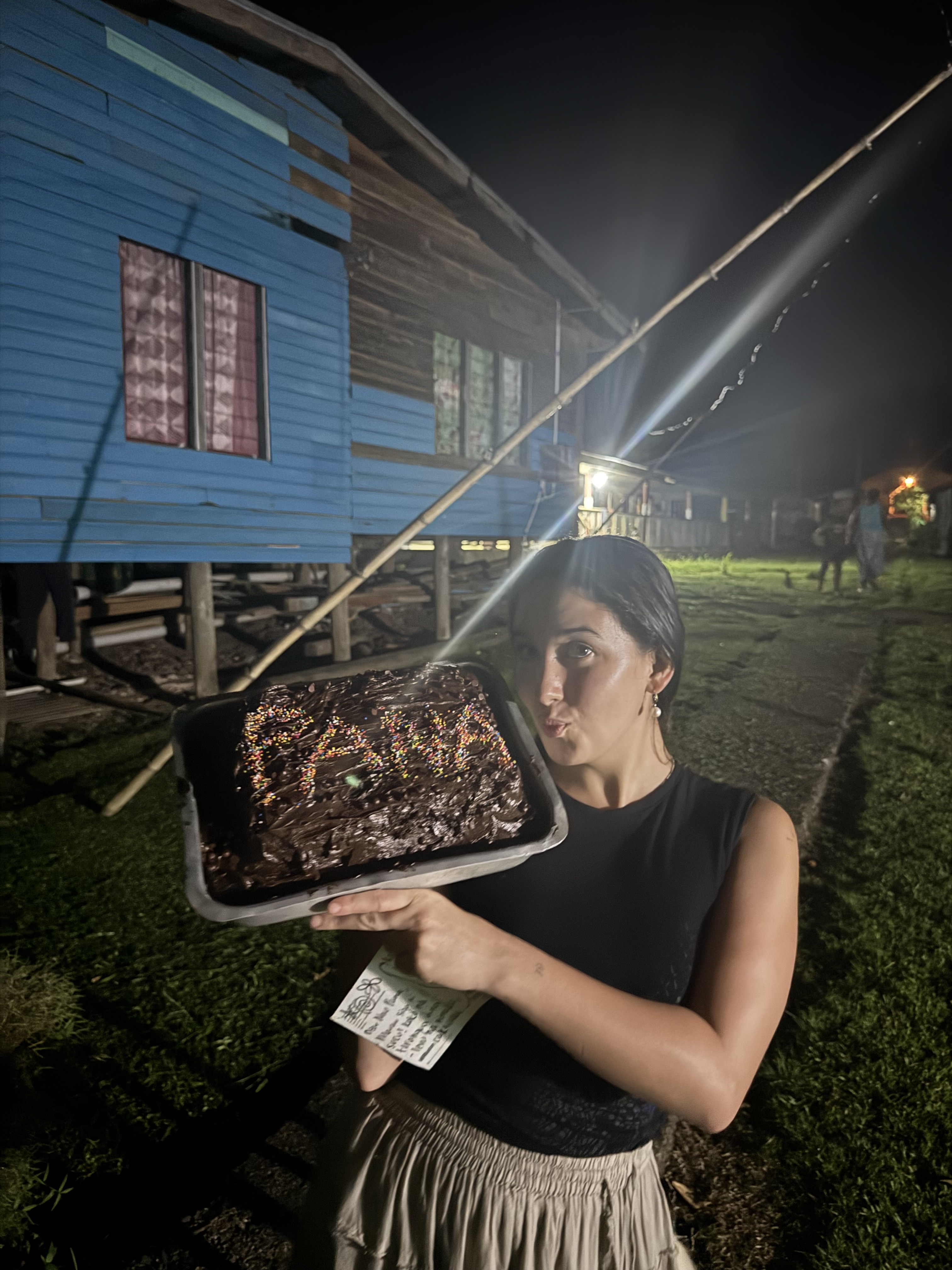
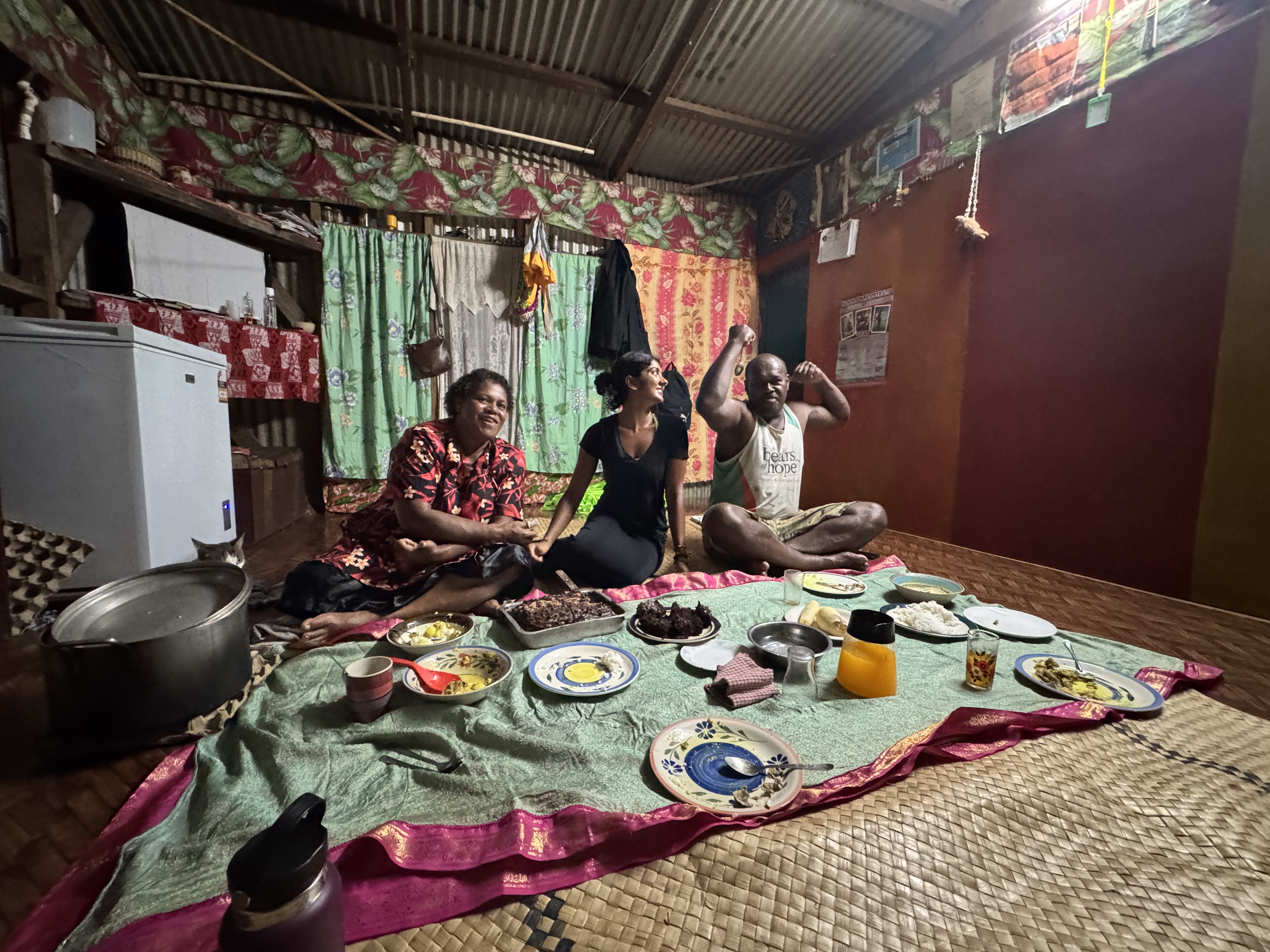
Reflecting on my time with Lauren and being welcomed by her host family and the entire community was one of the highlights of all my travels. Lauren is warm, genuine, curious, and open-minded, and has since become a dear friend. We’re already dreaming up ways to meet again somewhere else in the world.
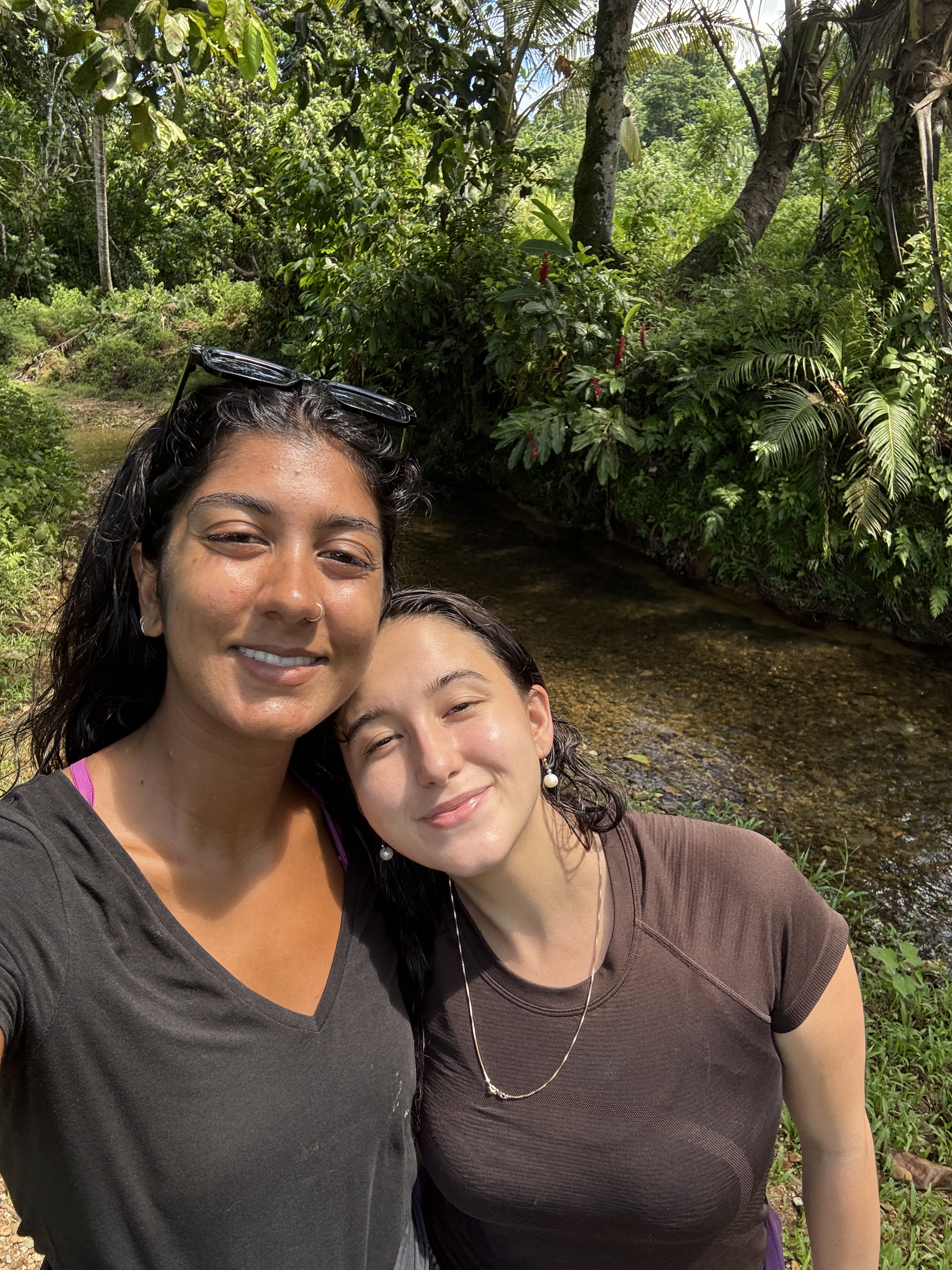
Getting a small glimpse into her traditional life in Fiji—and meeting the incredible people of her village—was something I’ll never forget. We hiked through thick bush, did yoga on a riverbank surrounded by forest, and spent hours talking about life, growing up in the Bay Area, and how Fiji had shaped us both in unexpected ways. We connected deeply—to each other and to the earth.
I learned so much from Lauren and her village, especially about the power of community and the perspective offered through Vanua, the Fijian concept of land, identity, and interconnection. On my personal mission to reconnect with the earth and live more intentionally, my time in Matailobau was pivotal—and I hope to return soon.

 My Ecological Odyssey